
South Lebanon: documenting ecocide to rethink reconstruction

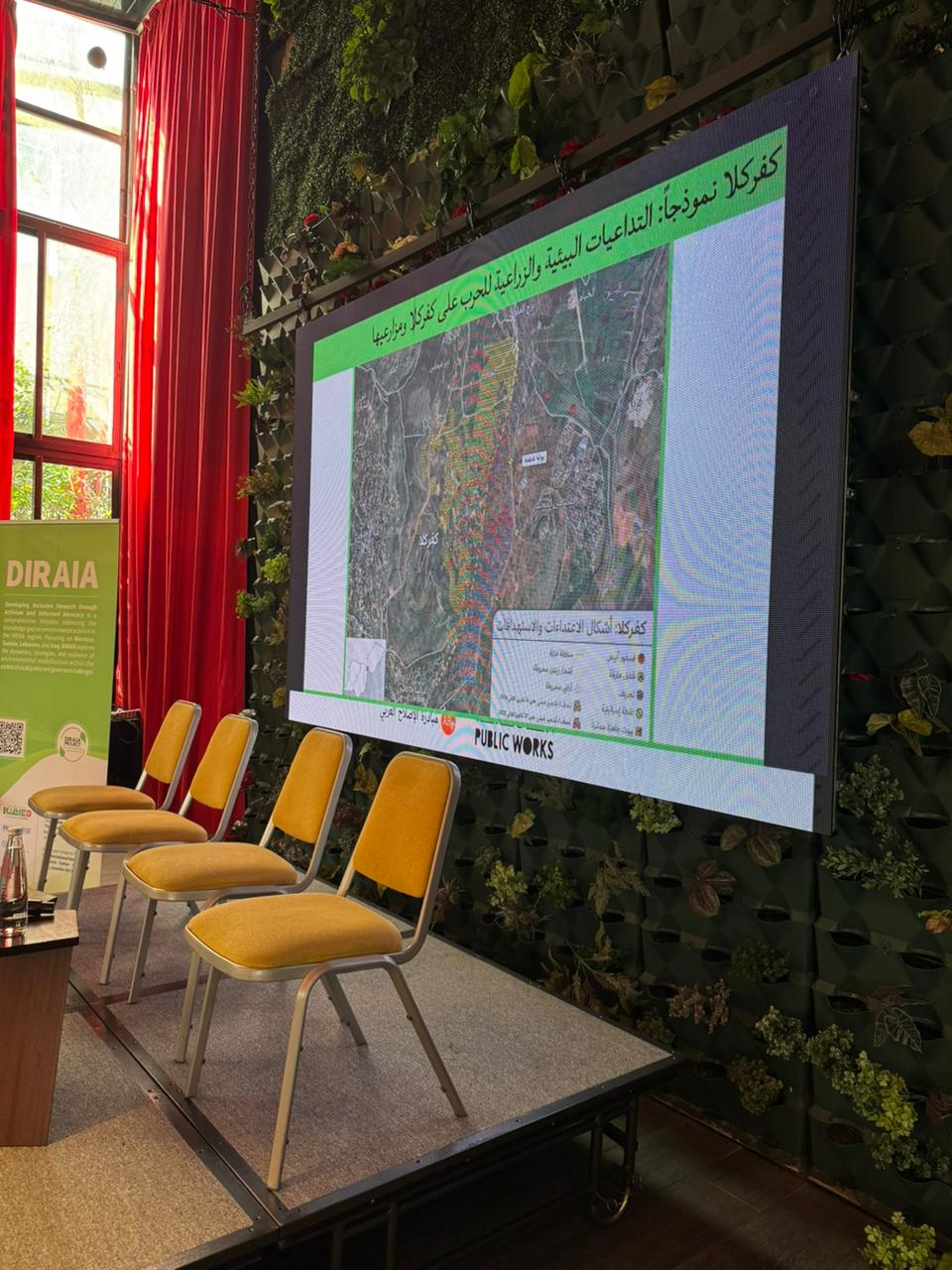
After months of bombardment and fires, southern Lebanon is facing a major environmental catastrophe. A new study documents the scale of the destruction, questions the territorial strategy at play, and calls for environmental justice to be placed at the heart of any reconstruction effort.
Scorched forests, burned farmland, paralyzed infrastructure.
Since October 2023, southern Lebanon has become the stage for environmental destruction of unprecedented magnitude. A new study launched by the Arab Reform Initiative in partnership with Public Works Studio offers a scientific, political, and territorial reading of what its authors describe as “ecocide.”
Presented at a public conference in Beirut, the research goes beyond a simple assessment. It seeks to transform scientific documentation into a tool for political action, at a time when the reconstruction of the South remains uncertain.
Systemic destruction
The study is based on a full year of participatory research: field investigations, mapping, community workshops, and interviews with residents, farmers, municipalities, and researchers.
The figures illustrate the scale of the damage:
- More than 60 localities affected by white phosphorus strikes
- 2,192 hectares of agricultural and forest land burned
- Irrigation networks, public infrastructure, and heritage sites destroyed
- Over 80% total building destruction in some border areas
Beyond the bombings, the repeated use of herbicides—particularly glyphosate—since January 2025 has worsened soil contamination. According to Amnesty International, attacks carried out after the 2024 ceasefire agreement could amount to war crimes.
Researchers describe a spatial strategy aimed at rendering border villages uninhabitable, in a context of forced displacement and attempts to transform rural areas into buffer zones or industrial development hubs.
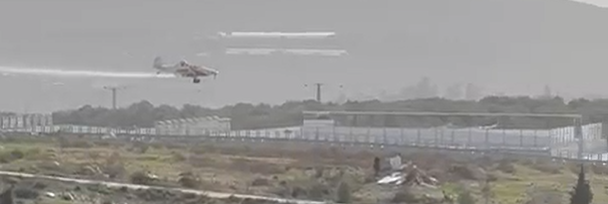
A sustained assault on biodiversity and farmers
For Sarine Karajerian, Director of Environmental Policy at the Arab Reform Initiative, the term “ecocide” is not excessive. “In partnership with Public Works Studio, we conducted comprehensive research and produced a report on the ecocide taking place in villages in southern Lebanon, particularly border villages like Kfar Kila, one of the most affected by the war. Why call it ecocide? Because there is a continuous attack on farmers, biodiversity, water, the environment, and all agricultural areas. This is a deeply agricultural region.” She emphasizes that the destruction goes far beyond visible infrastructure, it affects soils, ecosystems, and livelihoods. “Our role as a research center is to advocate and contribute to changing public policies related to environmental impacts in Lebanon, specifically in the South.” For the report’s authors, labeling the situation as ecocide helps politicize the environmental issue and demand mechanisms of accountability.
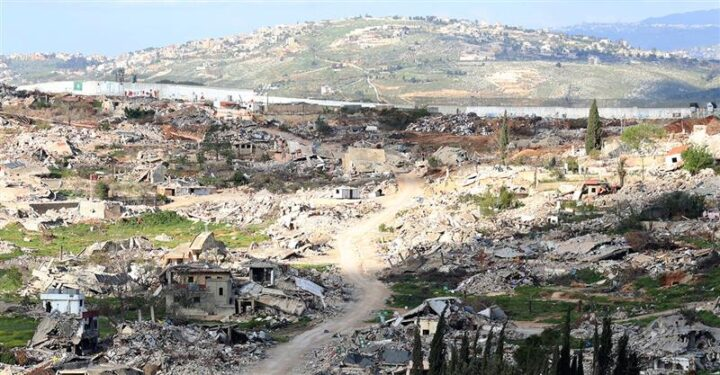
© Ramiz Dallah – Shutterstock
Kfarkela: a territory as a laboratory
The border town of Kfarkela serves as a key case study. There, the agricultural sector has been severely impacted, depriving many residents of their livelihoods.
Collective workshops helped identify priorities: soil decontamination, rehabilitation of water networks, direct support for farmers, and recognition of the right of return.
Yet on the ground, recovery remains nearly impossible.
Yasser Chamoun, veterinarian and member of the Khiam municipal council, stresses the urgency of a structured institutional response:
“Although the economic and security situation does not allow for the resumption of agricultural activities, the state must conduct a detailed scientific study on the damage and contamination levels of land, crops, and harvests.”
His call echoes the report’s conclusions: without independent and transparent scientific analysis, restarting agriculture poses major public health risks.
Reconstruction without an environmental vision?
The study also highlights the limits of current reconstruction policies. Less than 5% of war-generated debris has been recycled. The rest is dumped chaotically, without safety protocols—even though this rubble contains hazardous materials such as asbestos.
Waste and wastewater management infrastructure is now paralyzed, leading to the discharge of polluted water into the environment.
For researchers, the official response remains fragmented and overly technical, lacking a national vision that integrates environmental considerations as a central condition for the return of displaced populations.
Ecology, social justice, and the right of return
This work is part of the regional DiRAIA program, supported by the International Development Research Centre (IDRC), which explores the links between environmental movements, social justice, and governance in the MENA region.
The stakes go beyond ecological restoration. A fundamental question emerges: can we speak of reconstruction without recognizing ecocide as a crime and without ensuring a political framework that guarantees the dignified and sustainable return of residents?
The report’s recommendations are structured around six axes:
- Guarantee the right of return and support returning families
- Rehabilitate agricultural land and ecosystems
- Support farmers and food sovereignty
- Ensure documentation and accountability
- Establish a national framework for environmental justice
- Place the environment at the core of reconstruction efforts
Reconstruction as a political choice
As discussions unfold, one conclusion becomes clear: reconstruction is not merely a question of resources, but of political will. The lack of funding and a comprehensive plan continues to prolong the vulnerability of affected territories.
In southern Lebanon, protecting soil, forests, and water is not a secondary concern. It determines the very possibility of living, farming, and passing on a future.
And perhaps, of rebuilding, differently.