
At COP29, Lebanon Sounds the Alarm on the Environmental Devastation of War

At the United Nations Climate Summit, Lebanon is raising an urgent call to acknowledge the environmental consequences of armed conflict, advocating for the inclusion of a specific clause addressing wartime environmental damage.
As Lebanon struggles to recover from the strikes that have ravaged its territory since October 2023 amid clashes between Israel and Hezbollah, a largely invisible yet equally alarming crisis adds to the human and economic toll: the environmental disaster.
“War, just like transport or industry, is a massively polluting sector,” stressed Habib MAALOUF, head of the Lebanese delegation at COP29.
“We absolutely need a specific clause to cover environmental damage caused by conflicts,” he added. This issue was one of two key points Mr. Maalouf and his delegation brought to the summit in Baku, Azerbaijan.
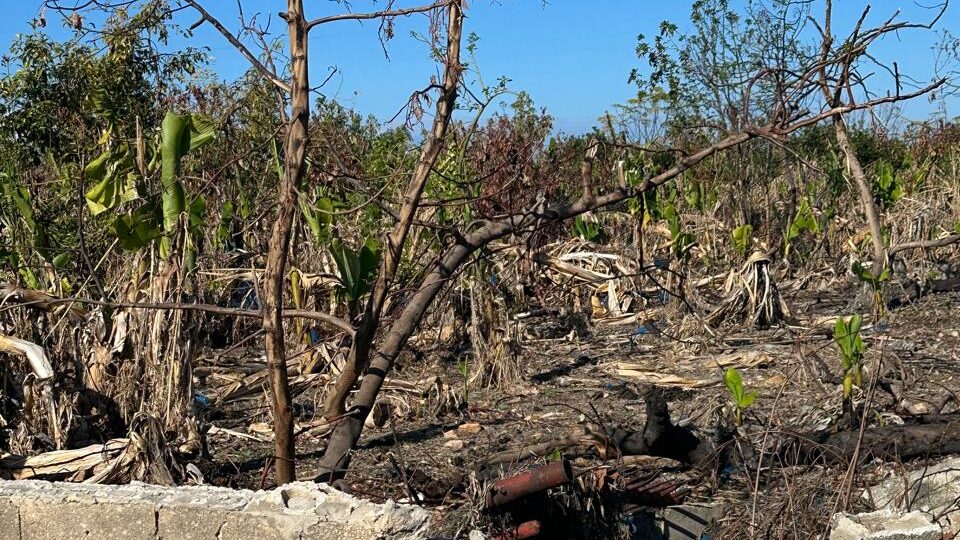
The alarm is based on tangible evidence: Lebanon’s air, soil, water, and farmland have been severely impacted by the bombings, threatening public health and the livelihoods of countless families.
“Lebanon is facing one of the most destructive wars in its history, with catastrophic ecological consequences,” stated Nasser YASSINE, outgoing Minister of the Environment, in an interview with 961 Scientia.
He also emphasized that post-war reconstruction is fertile ground for corruption, underscoring the urgent need for transparent practices and the integration of scientific methods in environmental cleanup and restoration.
“During visits to Nabatieh, Tyre, Dahieh, and the Bekaa Valley, I witnessed unprecedented levels of destruction, challenges that neither academic efforts nor current technologies can fully address in the face of war’s violence,” he added.
Unprecedented Air Pollution
Already burdened by a heavy reliance on fuel generators due to chronic electricity shortages, Lebanon now faces additional pollution from missile strikes and the destruction of infrastructure.
“Chemical compounds from missiles and fine particles from debris release toxic substances like dioxins, furans, and polycyclic aromatic hydrocarbons (PAHs),” explained Charbel AFIF, air pollution expert and Head of the Chemistry Department at Saint Joseph University in Beirut.
Fine particles from explosions, especially within a two-kilometer radius, pose immediate health risks. As winter approaches, rainfall may transfer these pollutants into the soil and groundwater.
Particularly concerning is the use of white phosphorus munitions, whose use against civilian targets is prohibited under international law. Over 420 bombs have been documented by the National Center for Natural Risks (NEWSP) of the National Council for Scientific Research. In addition to its deadly effects on human health, white phosphorus forms flammable compounds that pollute the air and soil over the long term.
Poisoned Soil
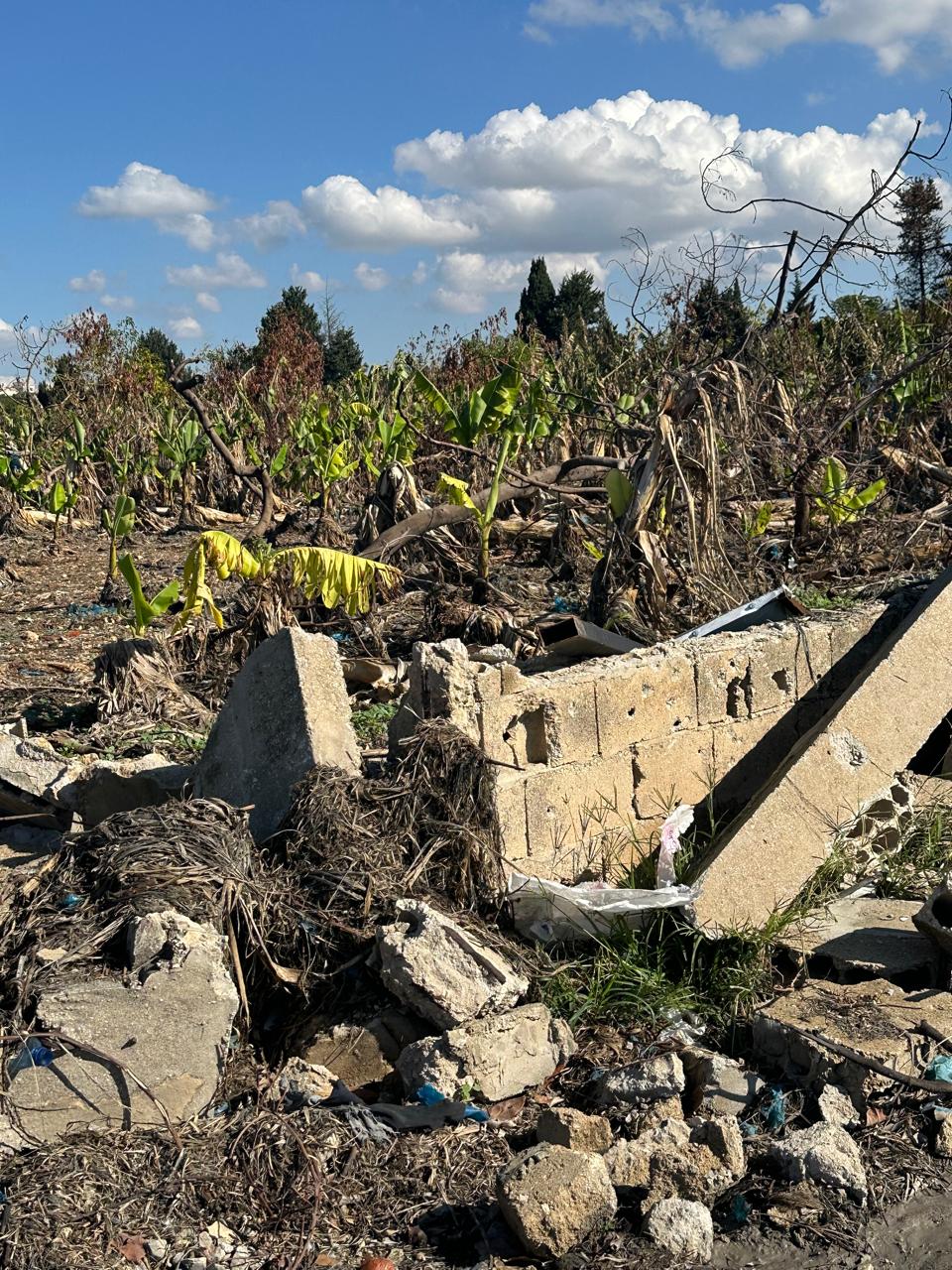
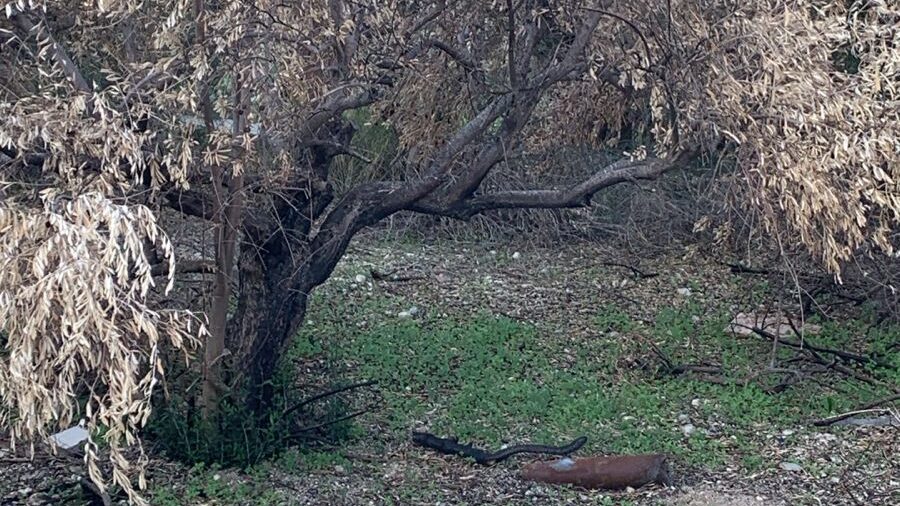
Armed conflicts have directly destroyed fertile lands and contaminated them with toxic substances, including heavy metals like lead, mercury, and cadmium. According to studies conducted by the Ministry of Environment, levels of white phosphorus up to 900 times higher than WHO standards were found in certain regions, making the soil sterile and increasing its acidity.
By September 2024, more than 1,879 hectares of agricultural land had been destroyed, severely undermining food production according to a UN report. Losses include over 47,000 olive trees and thousands of hectares of forests.
Contaminated Water
Lebanon’s water systems haven’t been spared.
“Groundwater—which provides two-thirds of the country’s water supply—is especially vulnerable to pollution,” said Samir ZAATITI, a hydrogeology expert. The porous and fractured nature of Lebanon’s bedrock makes it easy for chemical pollutants to seep into these vital reserves.
White phosphorus contamination persists in water as phosphoric acid, posing a major threat to both public health and agriculture. With 16 water stations damaged and numerous pipelines destroyed, access to clean drinking water is severely compromised.
A Devastated Agricultural Sector
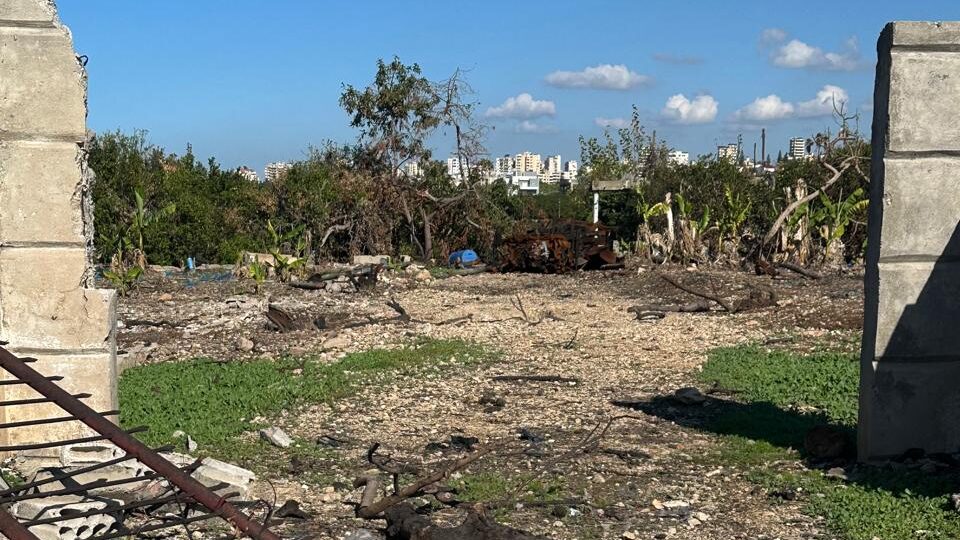
In southern Lebanon, where agriculture contributes up to 80% of regional GDP—the strikes have wiped out essential crops such as olives, bananas, and tobacco. Nearly 26% of farmers can no longer access their land, and 63% can only do so at significant risk to their safety, according to a UN survey earlier this year.
The damage doesn’t stop with crops. Over 1,700 livestock animals and 390,000 poultry have been lost, worsening food insecurity across the region.
A Lasting Environmental Crisis
The environmental impacts of this war extend far beyond immediate economic losses. The persistence and toxicity of wartime pollutants threaten entire ecosystems. These chemicals lead to bioaccumulation in aquatic food chains, increasing the risk of toxicity throughout the wildlife population, warns a report from the Agency for Toxic Substances and Disease Registry (ATSDR).
Forests, crucial for biodiversity and climate regulation, have also suffered, with over 1,200 hectares destroyed.
A Call for Environmental Accountability
Minister Nasser YASSINE pointed to the unresolved case of the piles of rubber still near the Beirut port after the 2020 explosion, illustrating the complexity of waste management in Lebanon. Despite available technologies and funding, the lack of suitable land for rubber disposal continues to pose a major challenge.
This situation highlights the need for a transparent process guided by clear principles such as recycling and the proper use of public land for waste management.
In response, experts like Habib MAALOUF are calling for international recognition of environmental responsibility in conflicts.
“This isn’t just for Lebanon or Gaza, we’re making this demand because war-related disasters take a massive toll on the global environment,” he stated.
As Lebanon tentatively begins its reconstruction, incorporating ecological considerations into recovery plans is essential for sustainable rebuilding. The scars left by this conflict, both visible and invisible, are a stark reminder that in times of war, the environment is often the silent victim.