
How the War in the Middle East Is Giving Russia a Second Wind

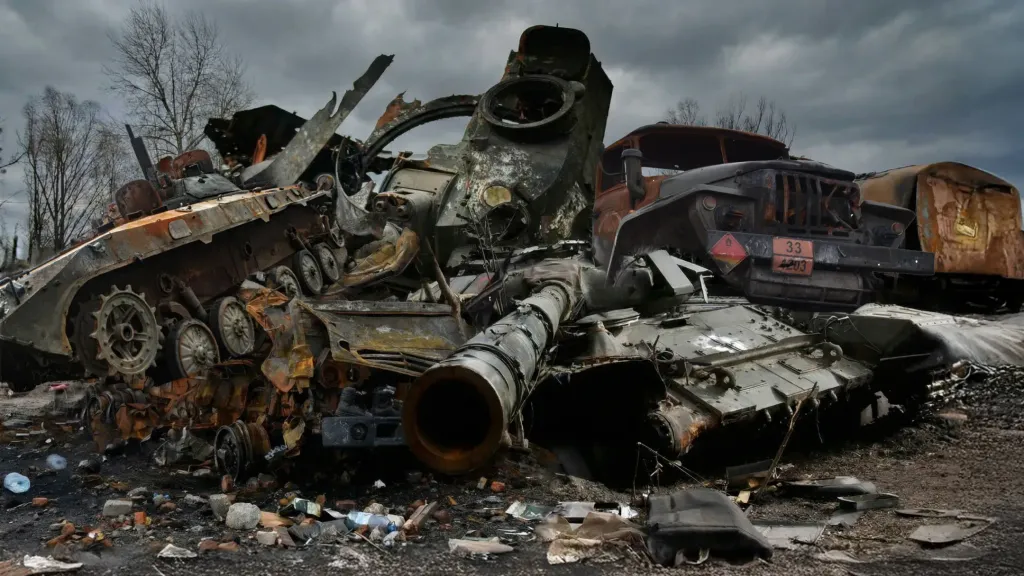
Hungary’s decision to reduce its gas supplies to Ukraine comes amid a profound upheaval in global energy markets. Against the backdrop of war in the Middle East, a major oil shock has sent prices soaring and reshaped economic balances. Russia is emerging as one of the biggest beneficiaries, turning the global energy crisis into a strategic lever to finance and sustain its war in Ukraine.
The announcement carries a clear geopolitical message. Hungarian Prime Minister Viktor Orbán said Budapest would “gradually reduce” gas deliveries to Ukraine until Kyiv restores the transit of Russian oil through the Druzhba pipeline.
The move could have significant consequences for Ukraine, which sourced 45.5% of its gas imports from Hungary in 2025, around 2.94 billion cubic metres, with the share still standing at 34% in March 2026.
Behind this regional energy dispute lies a much broader dynamic: the oil shock triggered by the war in the Middle East is reshaping global economic balances and providing Russia with an unexpected lifeline as it wages war in Ukraine.
Energy dependence under pressure
Since 2022, Ukraine has gradually reorganised its energy supplies. Hungary has emerged as a key supplier, accounting for as much as 14% of Ukraine’s total gas consumption during the first 10 months of 2025, in a market of around 21 billion cubic metres.
The threat of reduced deliveries comes as the regional energy system is already under strain:
- The Druzhba pipeline, a crucial conduit for Russian oil, was damaged by strikes on January 27.
- Hungary and Slovakia have tied their energy cooperation to the pipeline’s restoration.
- Budapest is also blocking a €90 billion European loan to Kyiv.
The regional dispute is unfolding within a global energy system already disrupted by shifting oil and gas flows.
A global oil shock with measurable consequences
The outbreak of war involving Iran sent an immediate shock through energy markets. The figures are stark:
- Brent crude rose from around $60 a barrel at the beginning of the year to more than $119 following the February 28 strikes.
- Russia’s Urals benchmark crude surged by around 60%, reaching $90 a barrel.
- The Strait of Hormuz, through which nearly 20% of the world’s oil passes, was partially blocked, further tightening global supply.
- The resulting price surge translated into a windfall for major oil exporters, with Russia among the biggest beneficiaries.
Before the shock, Russia’s fiscal position was already showing signs of strain:
- oil and gas revenues had fallen 46% year-on-year in January and February;
- the rouble was considered overvalued by around 30%;
- the government was considering budget cuts of up to 15%.
The Middle East war, however, abruptly reversed that trend.
Billions in additional revenue
Between March 1 and 15, Russia generated an estimated €7.7 billion in fossil-fuel revenues.
That amounts to roughly €513 million a day, up from €472 million in February — an increase of 8.7%.
Oil revenues alone reached €372 million a day, an increase of 14%.
Some estimates suggest the conflict could generate:
- an additional $150 million a day for Russia;
- between $84 billion and $252 billion, depending on how long hostilities continue.
At the budgetary level, every $11 increase in the price of oil above Russia’s benchmark price of $59 could generate an additional $28 billion in revenue.
Asia becomes the key market
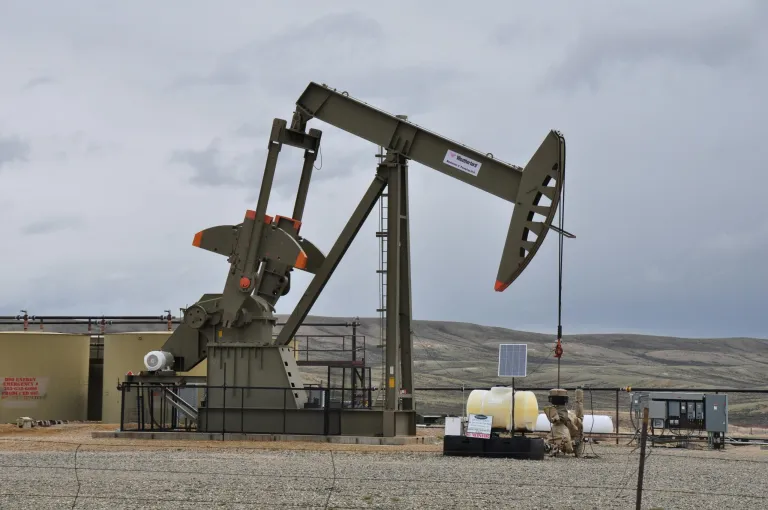
With access to the European market sharply reduced, Russia has increasingly turned towards Asia.
India and China now account for roughly 75% of Russian oil revenues.
India purchased €1.3 billion worth of Russian fossil fuels between March 1 and 15, equivalent to €89 million a day, compared with €60 million in February.
Indian imports have reached around 1.2 million barrels per day, well above the initial forecast of 800,000 to 850,000 barrels.
The geographical shift has helped offset much of the loss of the European market, where purchases have fallen to around €50 million a day. In 2021, Europe accounted for roughly 45% of Russia’s gas exports and 27% of its oil exports.
The indirect impact of eased sanctions
Political decisions are also amplifying the economic effects of the oil shock.
The United States has granted:
- a 30-day waiver allowing purchases of Russian oil already in transit;
- exemptions that enable certain countries, including India, to continue buying Russian oil.
While presented as temporary and limited measures, they facilitate the continued flow of Russian energy exports and help sustain Moscow’s revenues at a time when global prices are surging.
Ukrainian President Volodymyr Zelensky has openly voiced concern, arguing that such decisions indirectly strengthen Russia’s war effort.
A war economy gets a new boost
The additional revenues have a direct impact on Russia’s military capacity. Although hydrocarbons now account for around 20% of the Russian budget, compared with more than 50% in 2018, higher oil prices can provide Moscow with enough fiscal room to:
- finance the war effort without necessarily cutting social spending;
- sustain military production, particularly drones;
- cushion an economy weakened by sanctions.
In other words, the oil shock is acting as a fiscal multiplier for Russia’s war economy.
Ukraine risks being pushed into the background
The impact is not limited to financial flows. The war in the Middle East is also reshaping international priorities.
Western diplomatic and military attention is being partially diverted away from Ukraine.
Military resources, including air-defence systems, are being redeployed.
Prospects for negotiations are becoming more distant.
In Moscow, the shifting strategic landscape is reinforcing expectations of a prolonged conflict, potentially extending into 2027.
A complex geopolitical equation
Russia may be benefiting significantly from the oil shock, but the picture is not entirely favourable.
Potential costs include:
- the weakening of the strategically important North-South transport corridor;
- greater risks to Russian economic interests in the Gulf;
- a fall in gold prices, from €4,705 to €3,887 an ounce, affecting an asset that accounts for nearly 40% of Russia’s reserves.
For now, however, these costs appear smaller than the gains generated by the surge in energy prices.
Energy as a systemic weapon
Hungary’s threat to reduce gas deliveries to Ukraine illustrates a broader reality: energy has become a central strategic weapon.
The Middle East oil shock is acting as a catalyst, transforming a regional crisis into a global economic lever. For Vladimir Putin’s Russia, it represents a rare opportunity to:
- offset the impact of Western sanctions;
- strengthen its war economy;
- prolong the conflict in Ukraine.
In an increasingly interconnected energy system, every barrel of oil becomes a source of geopolitical power and every disruption, a potential accelerator of strategic change.