
“Le nom des ombres”: When Arthur Sarradin Performs an Autopsy on a Collective Silence

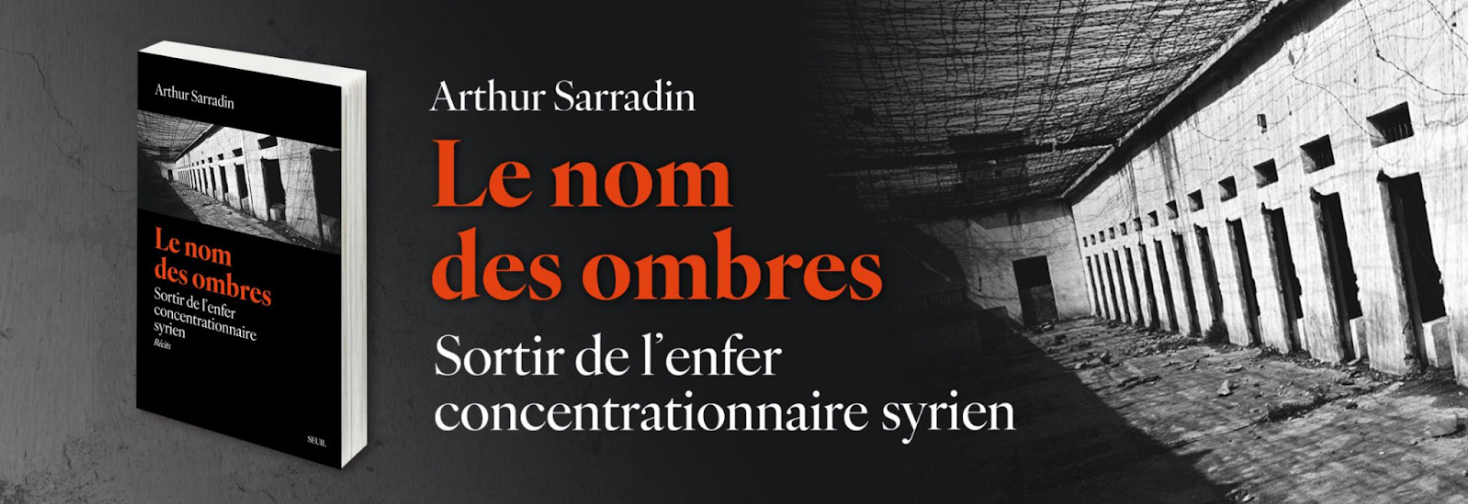
In his latest book, Le nom des ombres (The Name of Shadows), Arthur Sarradin ventures into a territory rarely explored: the landscape of Syrian silence. Following former prisoners, surviving poets and witnesses to erasure, the journalist examines how a regime can reshape language in order to subjugate consciousness. Somewhere between investigative reporting and social-science inquiry, his book raises a universal question: what remains of the human being when words themselves have been destroyed?
“I’m afraid they’ll come back.”
The sentence, uttered by Mahmoud al-Salim, a survivor of Syria’s Tadmor prison, opens Arthur Sarradin’s latest book, The Name of Shadows, like a wound that has never fully healed. This is not simply a collection of testimonies. It is an exploration of the mechanisms of silence, a journey into the heart of a system that, for nearly half a century, turned fear into a political and social instrument.
Through the eyes of Sarradin, a journalist and author, Syria is no longer merely a landscape of war. It becomes a laboratory of the unsaid, where humanity is eroded in step with the words people are forbidden to speak. The “war on words” described by the author reflects a dynamic well documented in sociology: symbolic domination. By suppressing language, the Assad regime did more than silence individual voices; it undermined the very possibility of a collective consciousness.
From investigation to the phenomenology of silence
Sarradin’s approach goes beyond conventional journalism. It resembles an ethnography of lost speech. He follows former detainees, repentant perpetrators, gravediggers and poets witnesses who might be described in sociological terms as actors of collective memory. Each attempts to rebuild their relationship with the world by reclaiming language.
Yet in The Name of Shadows, speaking is not enough. What matters is naming — and this is where Sarradin’s literary gesture becomes most powerful. To name is to resist erasure. To name is to give a body back to those who had been reduced to shadows. The process recalls the work of sociologist Arlette Farge on popular memory: the act of speaking becomes, in itself, a political act.
Sarradin’s method also echoes that of a social scientist: observation, cross-checking of sources and reflexivity. But here, the instrument is neither the questionnaire nor the database. It is writing. The text itself becomes a space for repair.
A literature of rehumanization
The power of the book lies in its constant tension between documentary rigour and poetic vertigo. Where a journalist might simply report, Sarradin questions; where a witness might fall silent, he writes in order to make existence visible. Each chapter functions as a vessel of memory, in which language recovers something akin to a biological function: keeping life alive.
The book is constructed almost like an experiment, confronting journalistic neutrality with the subjectivity of the witness. In one particularly moving passage, Sarradin recounts how the death of a fellow journalist forces him to confront the limits of “neutral” reporting. This crisis of journalistic language recalls Michel Foucault’s reflections on the “discourse of truth”: who has the right to speak, and at what cost?
The Name of Shadows offers no definitive answer. Instead, it creates a space of uncertainty in which literature becomes an instrument of cognitive resistance.
The making of silence: a collective object of study
Sarradin does not merely write about Syria. He writes about the contemporary world and its hierarchies of compassion. Through the war over words, he examines universal mechanisms of dehumanization: Why do some lives matter more than others? Why do certain forms of suffering provoke outrage, while others are reduced to statistics?
These questions resonate with the sociology of media: a global system in which voices from the Global South are too often filtered, questioned or reduced to mere “humanitarian testimony.” Sarradin suggests that this hierarchy is not simply a moral bias. It is a mechanism of power, rooted in a long colonial history of representation and the gaze cast upon others.
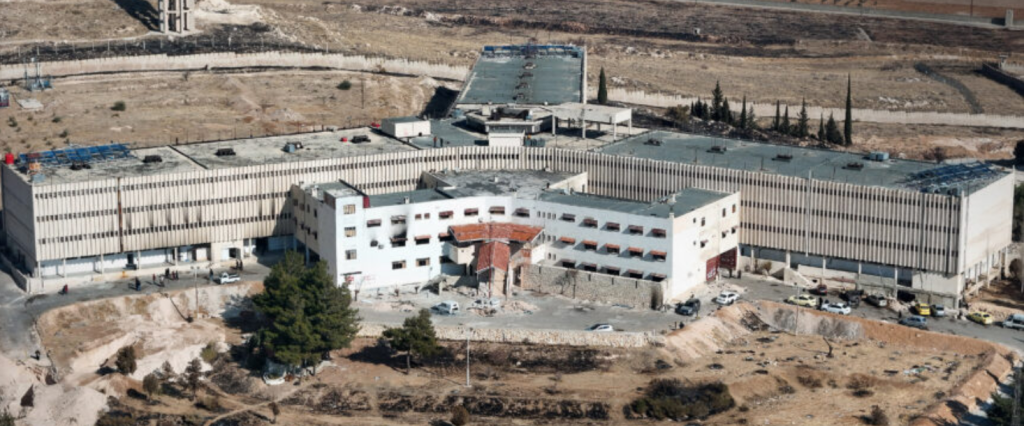
Crédits : Agence Syrienne Arabe d’information (SANA)
A laboratory of its own
By weaving together reportage, literature and social research, Sarradin creates a hybrid work: a text that exists on the border between genres. It is at once a work of field reporting, a meditation on the journalist’s role and a reflection on collective memory.
The Name of Shadows sheds light on what science might call narrative resilience: the capacity of individuals and communities to rebuild themselves through storytelling. But it also exposes the limits of that resilience: what happens when language itself has been destroyed?
The book should not be read merely as an investigation. It is an experience of rehumanization. It invites us to see testimony not as a static trace of the past, but as living material, constantly evolving.
A glimmer of light
Arthur Sarradin has produced a rare work at the intersection of investigation and meditation. In The Name of Shadows, there is something of the anthropologist and the poet, the sociologist and the survivor. The author reminds us that, in broken societies, words are instruments of survival as much as they are instruments of knowledge.
This book does not seek to make us weep, nor does it seek to provide easy explanations. It seeks to understand. And that may be where its most profoundly scientific dimension lies: in its stubborn attempt to measure what language can still repair in a shattered world.