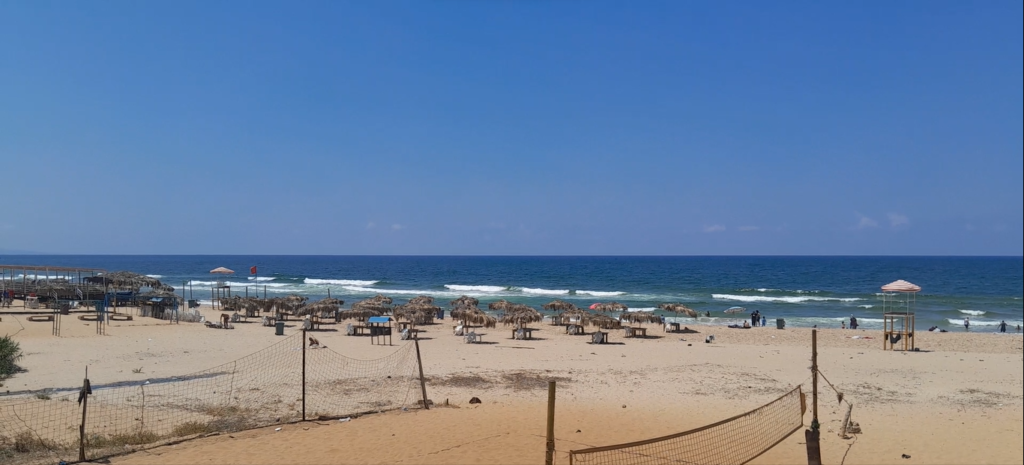
CNRS-L: Lebanon’s Beaches in Reassuring Condition

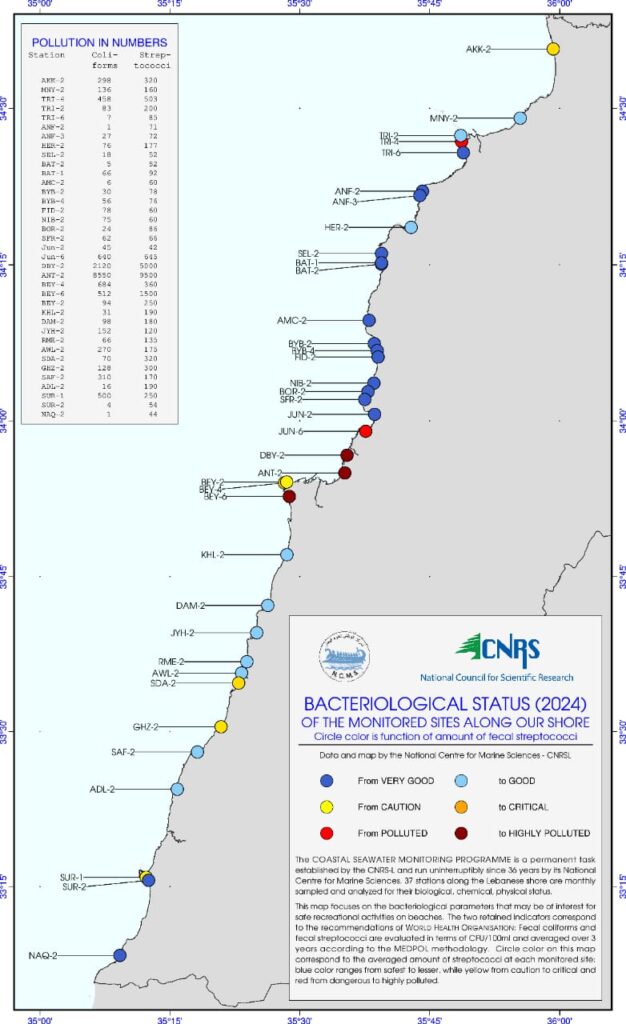
The Lebanese National Council for Scientific Research (CNRS-L) released its 40th annual report on the state of Lebanon’s beaches on Thursday. Of the 37 public beach sites where water samples were collected, 26 were classified as clean, reflecting an overall positive picture of the country’s coastline.
In a rare piece of encouraging environmental news, Lebanon’s coastline appears to be less polluted than many had feared. According to the report, 26 of the country’s 37 publicly accessible beaches representing approximately 70% of the monitored sites meet acceptable water quality standards. The findings were presented during a press conference held at the CNRS-L headquarters in Jnah as part of the institution’s annual report, The Environmental Status of the Lebanese Coast, which focuses on pollution levels at public beaches.
The report also identifies six beaches as “critical” and five as “extremely polluted,” down from eight in the previous year’s assessment, indicating a gradual improvement in the most severely affected areas.
The 26 beaches classified as safe are located in Tripoli (1), Enfeh (2), Heri (1), Selaata (1), Batroun (1), Amchit (1), Byblos (2), Fidar (1), Okaibeh (1), Bouar (1), Safra (1), Jounieh (1), Beirut (1), Damour (1), Jiyeh (1), Rmayleh (1), Al-Awali (1), Ghazieh (1), Sarafand (1), Adloun (1), Tyre (1), Naqoura (1), Khaldeh (1), and Miniyeh (1).
The study also compares the 2024 results with those of the previous year, highlighting several improvements in seawater quality. Two sites moved from the “good” category to “excellent,” three improved from “caution” to “good,” one advanced from “critical” to “good,” two shifted from “polluted” to “caution,” and one improved from “polluted” to “critical.” However, a slight deterioration was observed at several locations, including Rmayleh, Jiyeh, and Heri, which dropped from “excellent” to “good.”
Beyond water quality, the report examines chemical contamination in marine organisms. According to the findings, fish caught in Lebanese waters generally do not show contamination by polychlorinated biphenyls (PCBs) or heavy metals, highly toxic substances that tend to accumulate in fatty tissues and can pose serious health risks, particularly to developing fetuses, including neurological malformations.
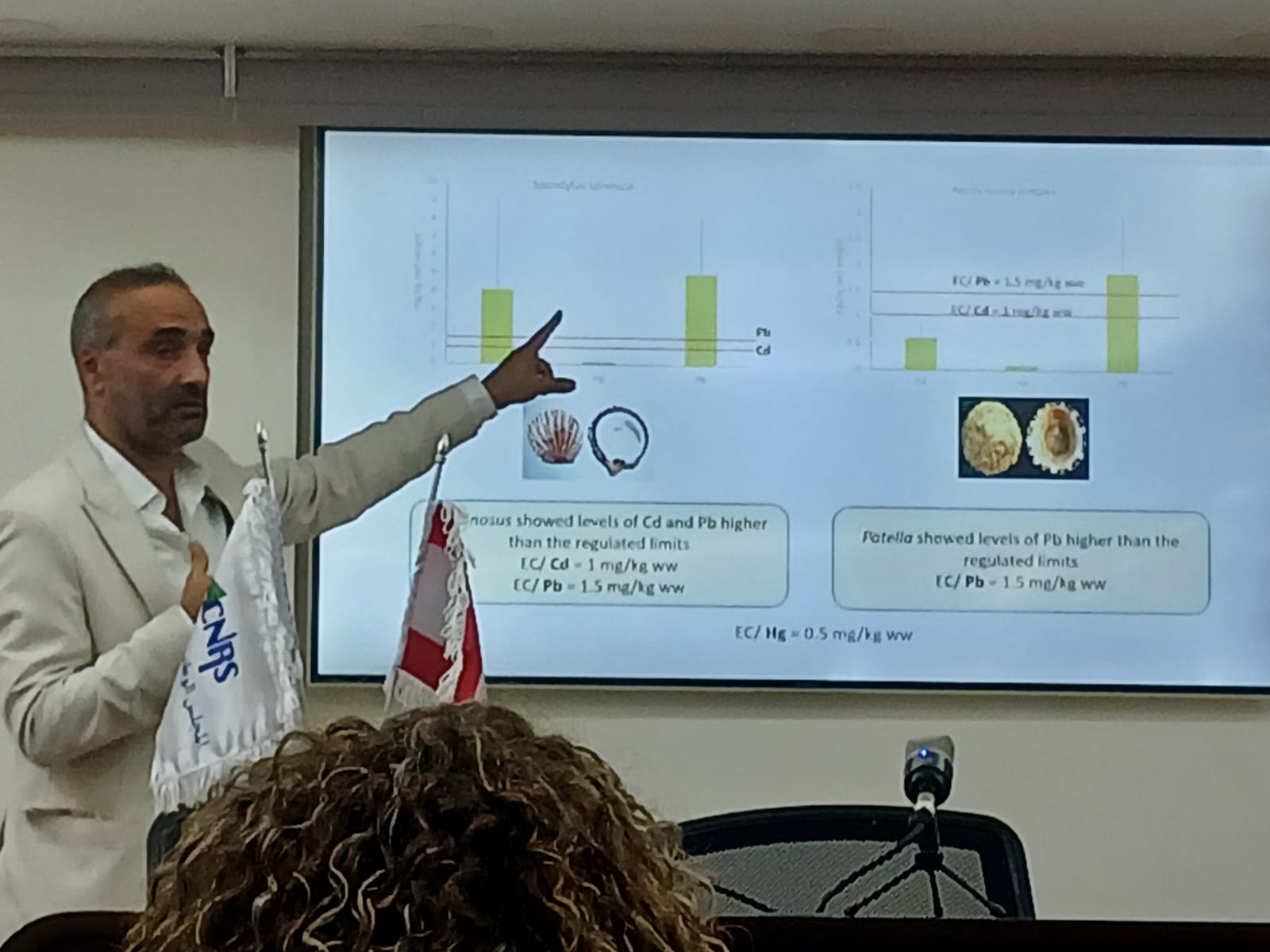
However, the two shellfish species analyzed showed elevated contamination levels. The rustic limpet (Patella rustica) contained elevated concentrations of lead, while the spiny oyster (Spondylus spinosus) showed increased levels of cadmium.
The report also presents the results of a new study on plastic pellet pollution along Lebanon’s coastline. These industrial plastic granules, commonly used as raw material in plastic manufacturing, have increasingly been found on Lebanese beaches, raising concerns over a growing but often overlooked source of marine pollution.
Finally, CNRS-L experts renewed their warning against consuming the silver-cheeked toadfish (Lagocephalus sceleratus), an invasive species that is highly toxic to humans. Native to the Indian Ocean and the Red Sea, the species entered the Mediterranean through the Suez Canal and has successfully established itself thanks to favorable environmental conditions, including the absence of natural predators, abundant food resources, and suitable water temperature, salinity, and currents.